


“Some people think a writer can’t drive a nail. Look at Thoreau and you know that’s bullshit.” — Larry Brown, Billy Ray’s Farm: Essays from a Place Called Tula
I read Joe in 2015, right after I got back from a trip to Alaska. I had been on National Student Exchange, and that transition back was hard — back to dorm life after months of adventure, and then the first serious bout of depression I’d had as an adult, though I didn’t have the words to name it at the time.
I was a junior at Winthrop University, just learning that I wanted to write. I didn’t even know when I started watching the movie, Joe (2013), that it was also a book. I watched the lumber crews poison native trees and replant pine in long rows. It looked like so much of the land I grew up on in the midlands of South Carolina. I understood innately the hard labor of Joe’s dual protagonists (Joe, Gary) because there was a direct lineage between their work and my father’s work as a carpenter.
Joe, played by Nicolas Cage of all people, was not unlike my father actually, and I watched Gary, who at fifteen pines for a father figure he can actually model himself after since his own, Wade, is abusive and an alcoholic. Cage called his depiction of Joe, “an ode to those people that we come across in life — those angels, if you will — that really embody what a father is.” My own father falls somewhere between Wade and Joe, certainly not an angel, but some amalgam of alcoholic and abuser. All of this approximated a version of my own early life, one that I’d managed to set aside until I realized that at least some part of me (and probably so many other kids from the South) lived inside of Tye Sheridan’s portrayal of Gary.
I ordered the book the same night — a first edition, hardcover. It arrived and I read it in two days. On the night I finished it, I was up until 2:15am. I’ve kept a journal since I was 18 so, embarrassingly, I can confirm how much this moment meant to me. I loved it so much that the day after I finished it, I started it again. My last journal entry in the month of February, just a few days after reading Joe, was, “In February I felt alive again.” This book lit up my world.
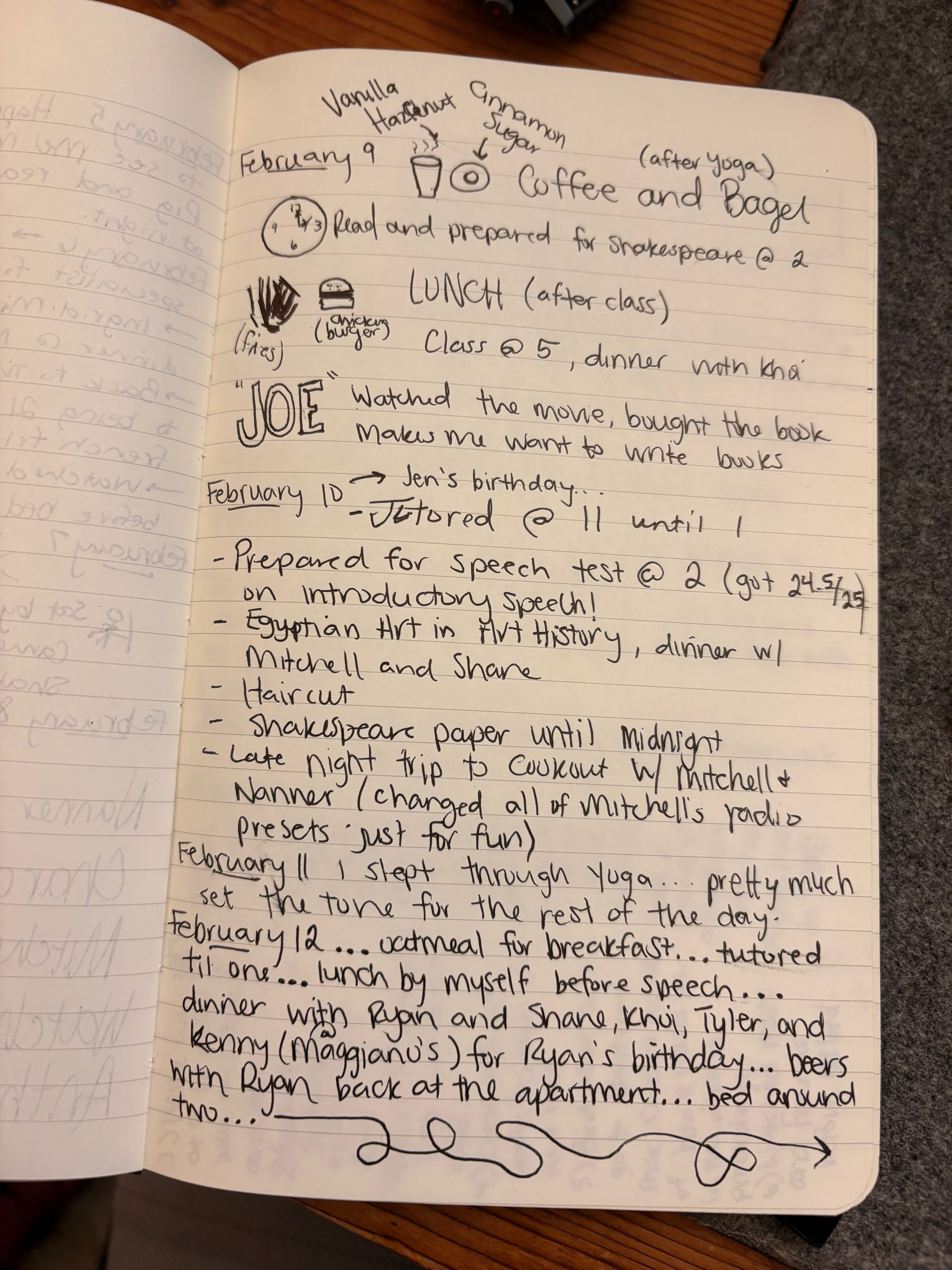
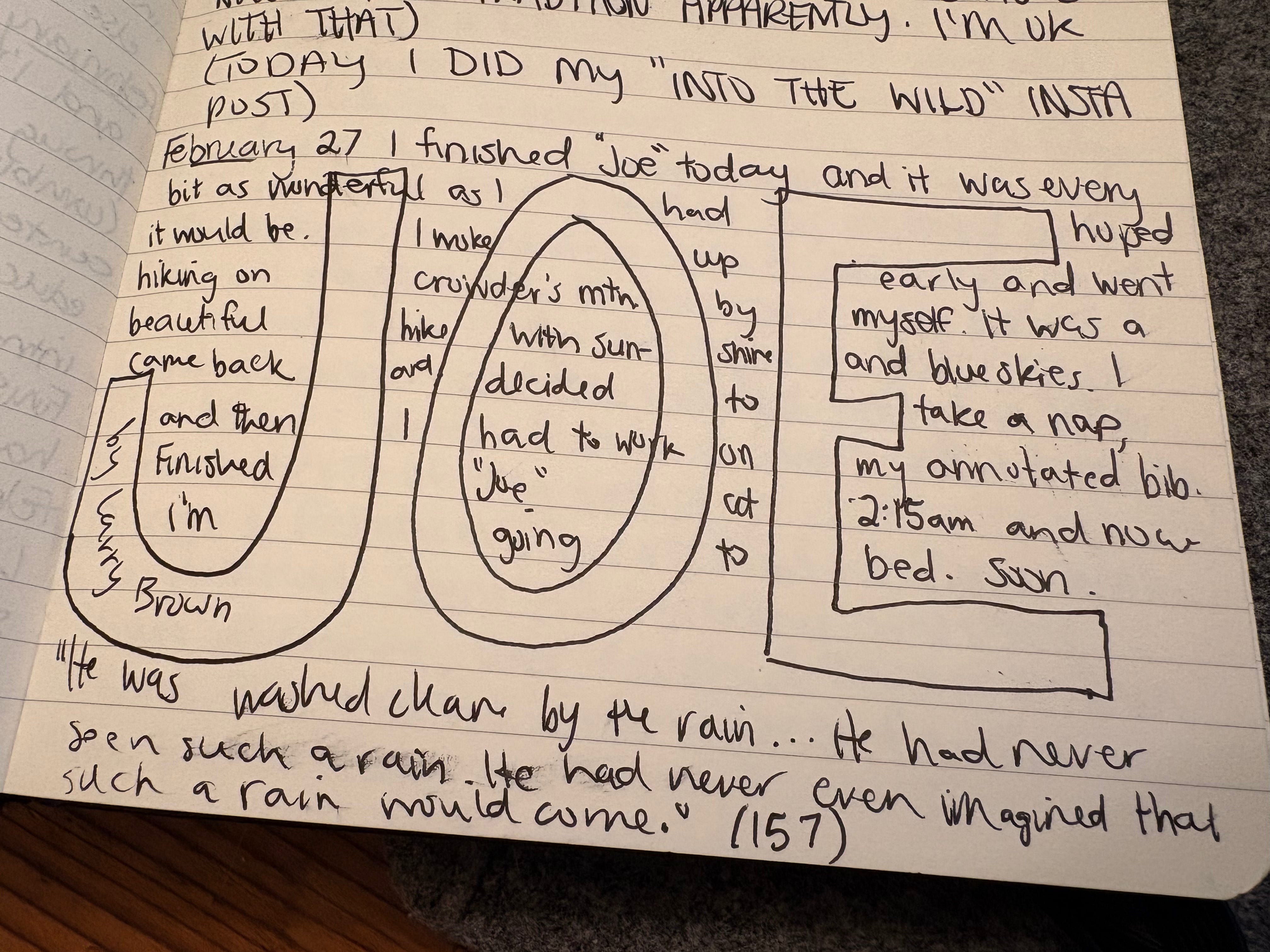
As I reflect now, my infatuation with Joe and the work of Larry Brown and his contemporaries stemmed from how I saw my own experience within the story. I was actually lucky to even be getting a college degree. My dad, at my age, was already working construction with his dad, whose dad before him had been a farmer. The forces surrounding my life at an early age — poverty, alcoholism, addiction, hard labor — were the same ones many of Brown’s characters lived through.
My relationship to the work now is more complicated. Larry Brown’s Mississippi is real, but it’s also a specific perception of place — one built almost entirely around white working-class men, and one that leaves out entirely or oversimplifies dramatically the people of color and the women who are actually in the book. The question of authenticity and abstraction of a literary aesthetic like “grit lit” and the “rough South” is one that I’m in engaging with here. Zackary Vernon writes, in his essay “Romanticizing the Rough South: Contemporary Cultural Nakedness and the Rise of Grit Lit”:
“The commodification of Grit Lit is problematic in that it enables readers to consume an ostensibly “authentic” version of southern culture with a safe degree of remove, rather than having to face the real-world hardships endured by the actual inhabitants of the Rough South. If readers romanticize the Rough South for its refusal to surrender to the homogenizing forces of global capitalism, then we run the risk of not confronting and ultimately not addressing the social and economic problems faced by those down-and-out southerners who have become the principal subjects of the genre.”
Loblolly Press, my own work as a publisher and as a writer, is still in dialogue with this question of authenticity — and what it means to be a Southern writer in 2026. You can see it in our mission:
Loblolly Press was founded to make room for work that often struggles to find a sustained home in traditional publishing. We publish writers whose voices are shaped by the South and attentive to the pressures of living here now. Our goal is not to define Southern literature, but to expand its possibilities through careful editorial practice and long-term partnership with our authors.
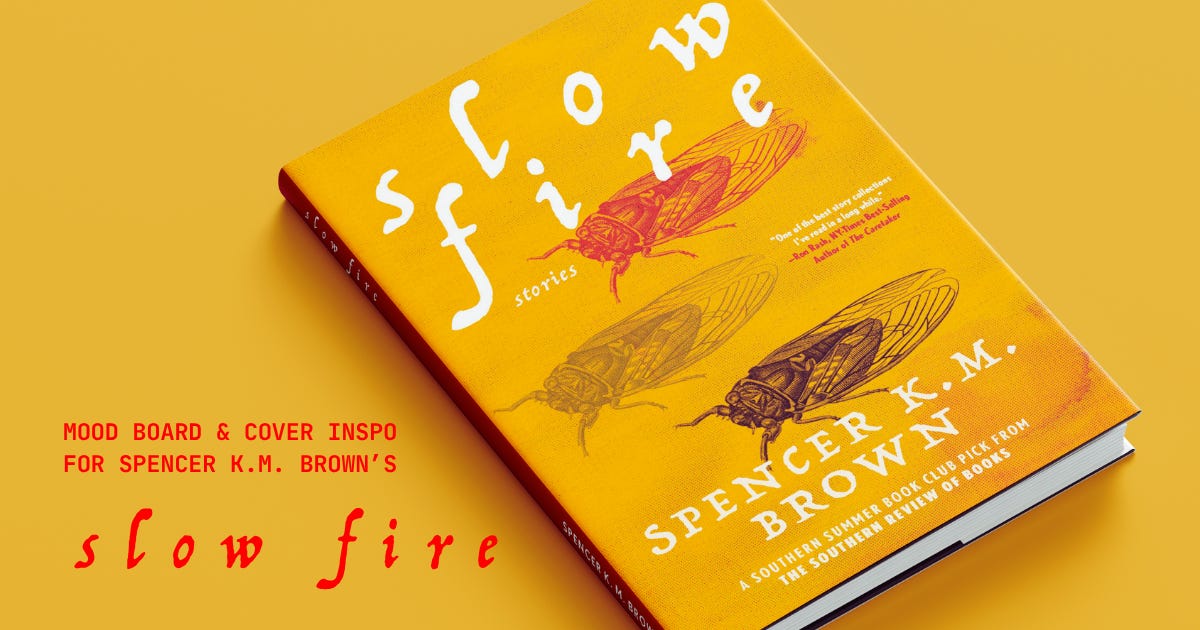
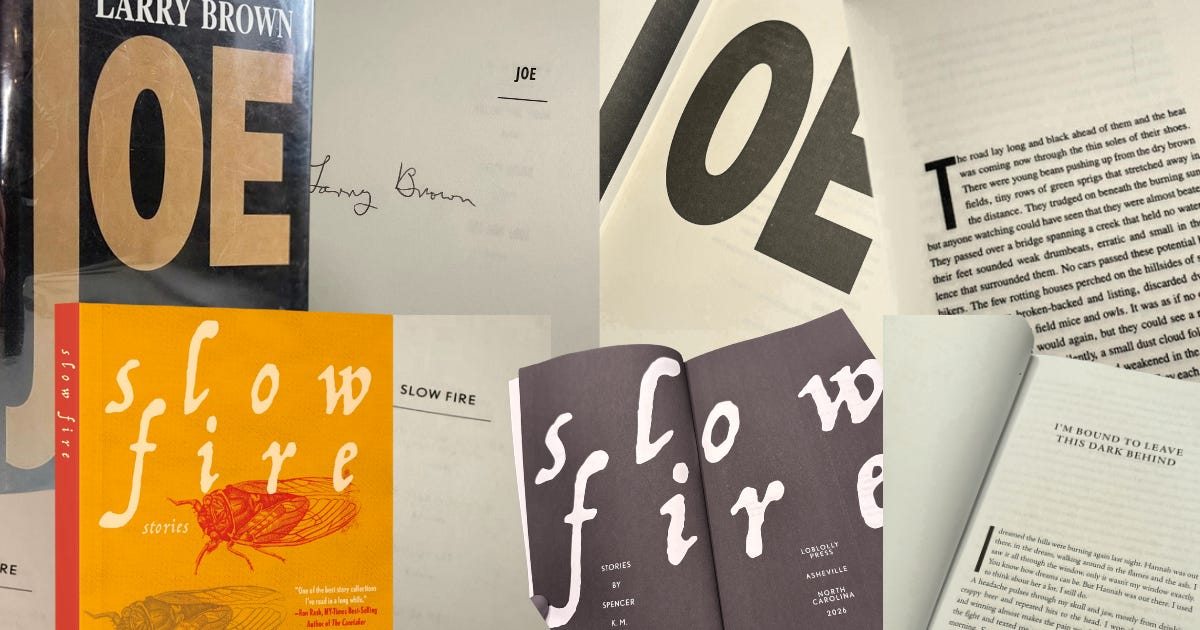
I haven’t read Joe again in the intervening years since those first two times. I also haven’t returned to the movie. I do often return, though, to the actual design of the book, and especially so while working on the design of Spencer’s collection, Slow Fire.
The complexity of Spencer’s character’s and stories stem from a kind of moral underpinning influenced by the work of Flannery O’Connor and through her own influence the work of Southern writers since then. The design aesthetic is influenced by this as well which you can in Molly Renda’s cover design for Joe and the work of many other designers from the same time period:


You can even see this style present in book design today with something like James by Percival Everett (a native South Carolinian) that has a jacket design reminiscent of Joe.
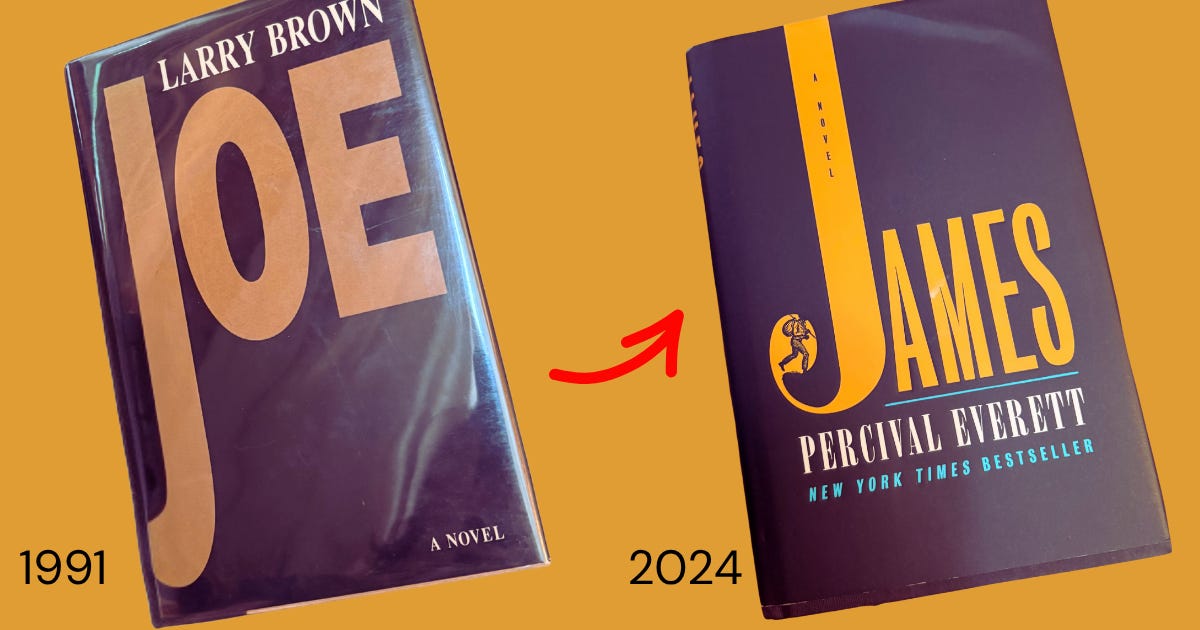
The simplicity of the large type on a stark black background, the brown-paper-bag styling of the title, the roughness of all of it — the design of the book makes way for the moral complexity of what it contains, made all the more interesting and difficult by what the characters choose within and by the history of the region underneath it all.
As Spencer writes, early in the first story:
“I never understood how someone could own land. Whose is it? Who’d we get it from? Who’d they get it from? And somehow it always comes back to someone having to die because someone else wants something.” — Spencer K.M. Brown, “I’m Bound to Leave This Dark Behind,” Slow Fire, first published in Salvation South
That’s where the design of Slow Fire starts to take shape. It’s grounded in the analog and in the working class. Lib Ramos, founder of Good Printed Things and our lead cover designer for this collection, shared:
“I wanted to capture a hazy, layered look with this design, and adding a subtle halftone pattern really helped add some depth and interest. Creating something in this yellow-orange color scheme is definitely out of my typical color comfort zone, and it was a really great design challenge.”
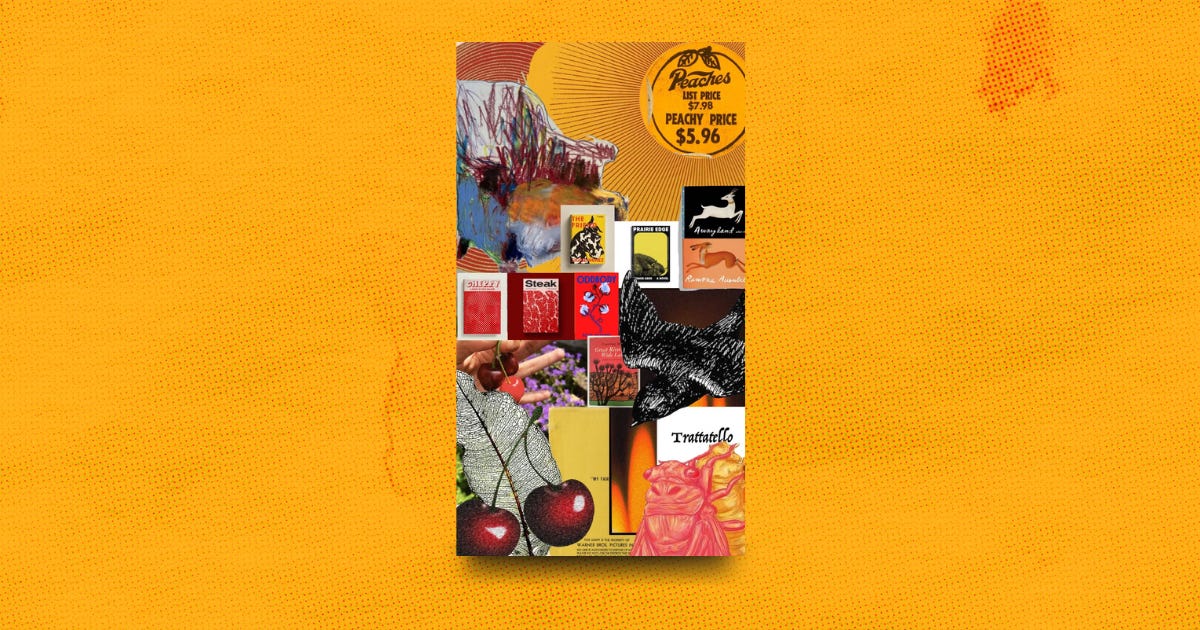
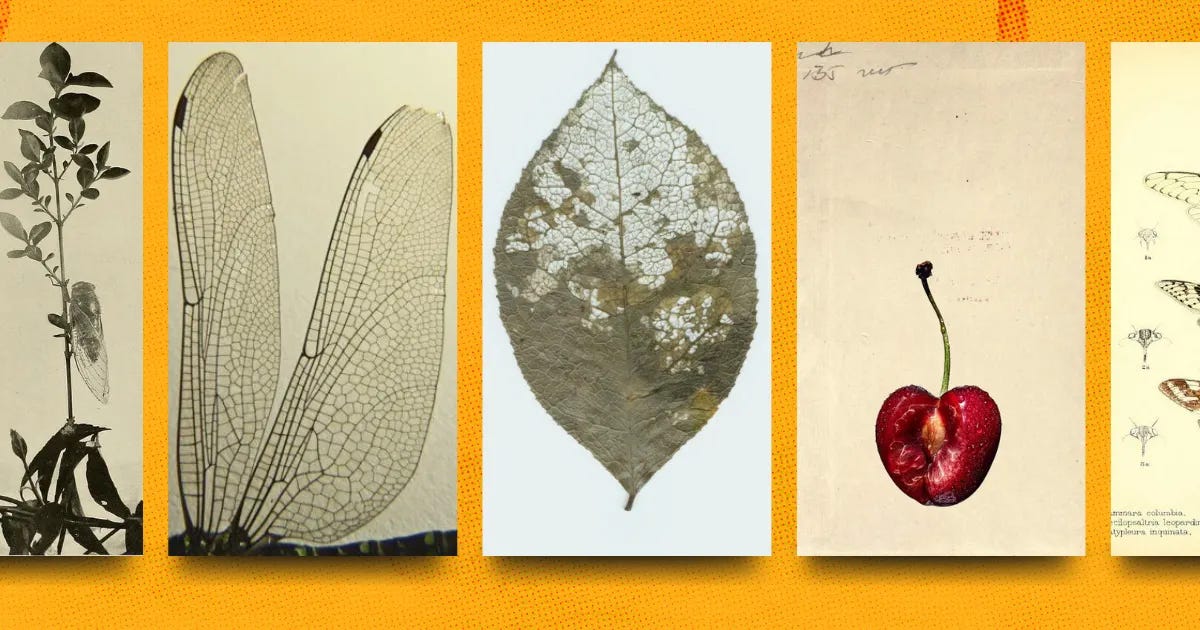
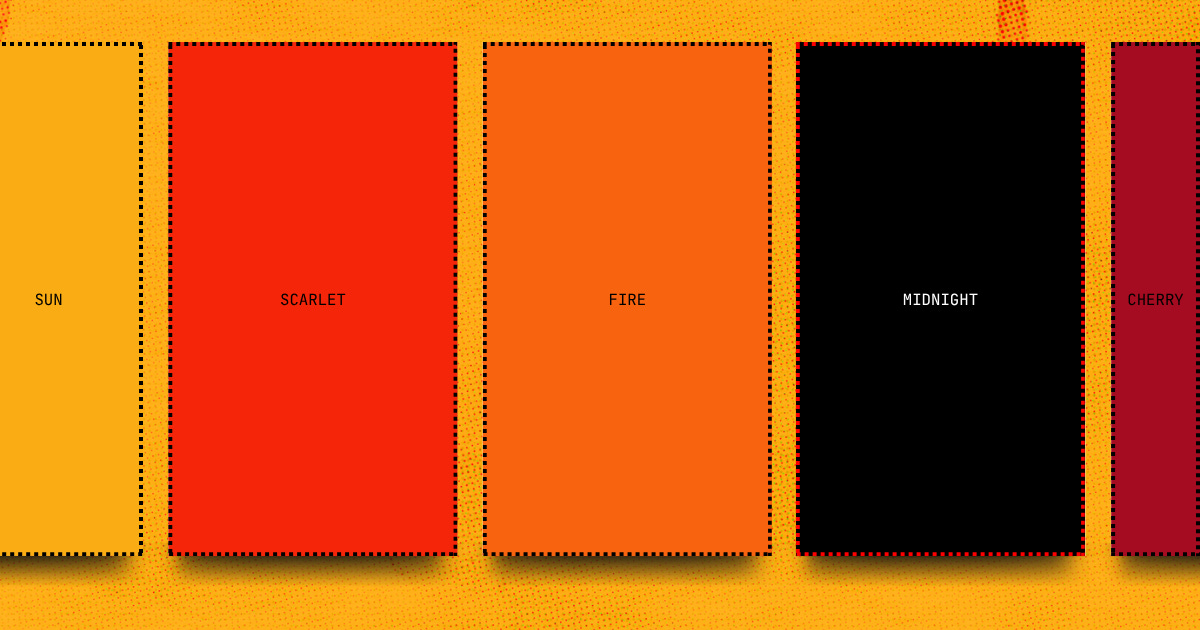
We built on that for the interior of the book while also paying homage Joe’s book design. Joe opens on plain reportage: “The road lay long and black ahead of them and the heat was coming now through the thin soles of their shoes.” Slow Fire opens on a line that could sit right next to it: “I dreamed the hills were burning again last night.” The design of the text inside the book steps back and in its own way, allows the words (and story) to really come through.
This kind of work comes out of a slow gathering of influences over time — we’re really proud of the work we put into taking Slow Fire from manuscript to book. We would love for you to read it —it comes out August 6. Pre-order now to receive it by release day. In the meantime, here’s a gathering of other Southern writers expanding the definition of Southern lit and what it means to be a writer in the South today:
Jesmyn Ward, Kiese Laymon, Silas House, Ron Rash, Natasha Trethewey, Crystal Wilkinson, Frank X Walker, Chris Offutt, Rick Bragg, Wiley Cash, Mesha Maren, Robert Gipe, Jericho Brown, Brandon Taylor, Tiana Clark, Nikky Finney, Tayari Jones, Ashley M. Jones, LeAnne Howe, and Marilou Awiakta.
⁂
I haven’t heard of grit lit before. That’s so interesting. I wonder if The Glass Castle would fall into that genre. As I read your post, I realized there are so many stories where the takeaway is “poverty develops one’s character,” and that can be depicted authentically or stereotypically/idealized.